

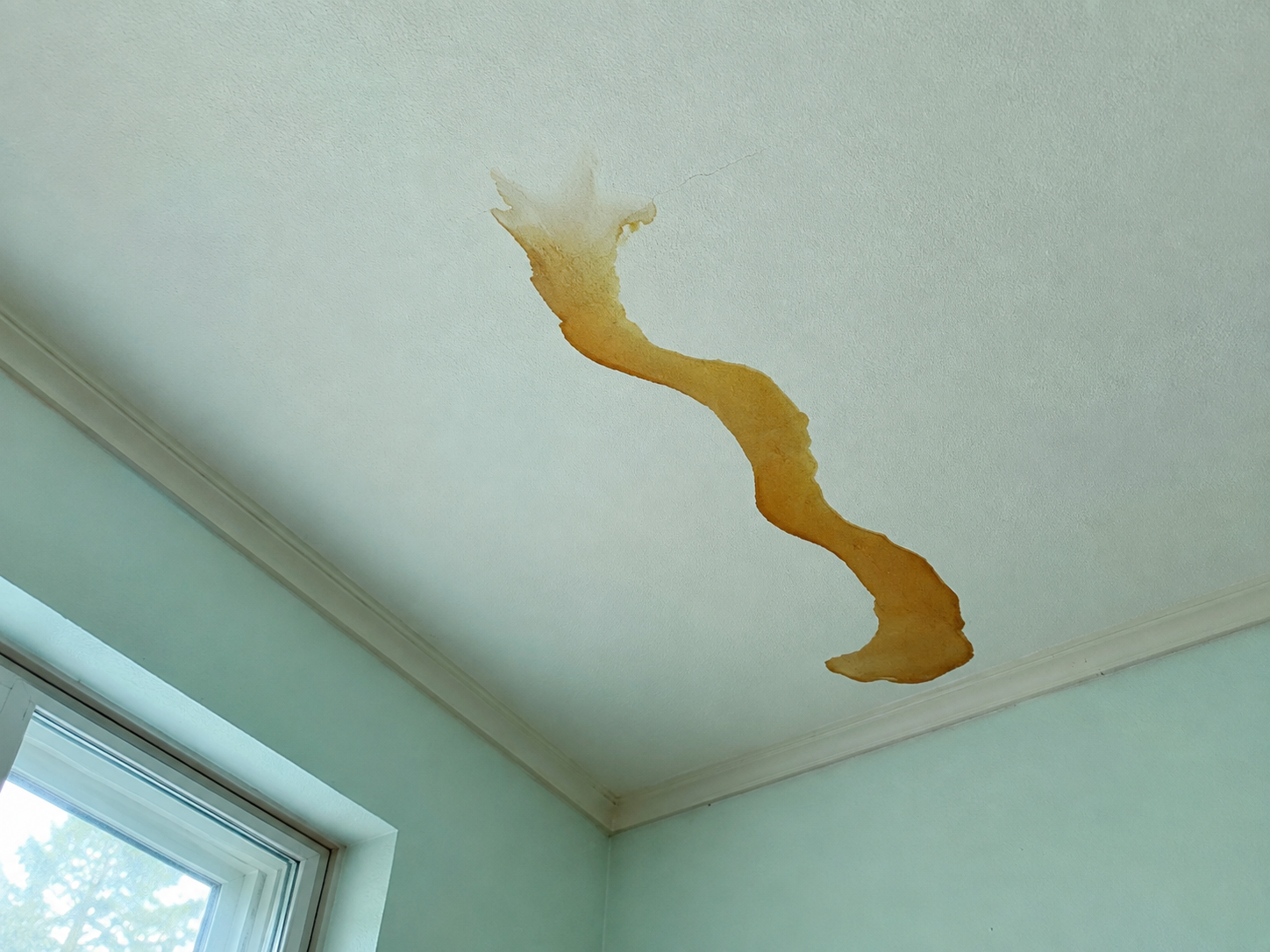
Ceiling stain or active drip
Likely cause: Usually one slipped tile, a failed flashing or a blocked valley above, water tracks along timbers before it shows.
Typical fix: Trace the entry point, replace or re-bed, then check the surrounding area.
Emergency page
This page is here to help you work out how urgent your roof actually is, what to do in the next ten minutes, and what happens when you call.
Roofers get called out to plenty of things that could have waited a week and miss the ones that could not. Find your situation below.
Bucket under the drip, furniture and electricals moved clear.
Stay clear of the affected area. A waterlogged ceiling may collapse. Do not attempt to puncture it. Call for professional help.
Water near lights or sockets: isolate the circuit if you can do it safely, otherwise leave it and tell us on the call.
Inside and from ground level outside. Useful for the repair and for any insurance claim.
Wet tiles and slates are lethal. Nothing up there is worth the risk — that part is our job.
No call centre and no lead-selling. You speak to the roofer who turns up.
Postcode, what you can see, when it started. Two minutes on the phone.
You are told whether it needs today, this week, or is not an emergency at all, including if someone else can get there sooner.
Temporary weatherproofing, sheeting or securing tiles to stop water getting in.
Pictures of the actual fault, the cause explained, a fixed price for the permanent repair.
Booked for the next suitable dry day. No work starts before you approve the price.
Nine out of ten emergency call-outs are one of these four. None of them need a new roof.
Likely cause: Usually one slipped tile, a failed flashing or a blocked valley above, water tracks along timbers before it shows.
Typical fix: Trace the entry point, replace or re-bed, then check the surrounding area.
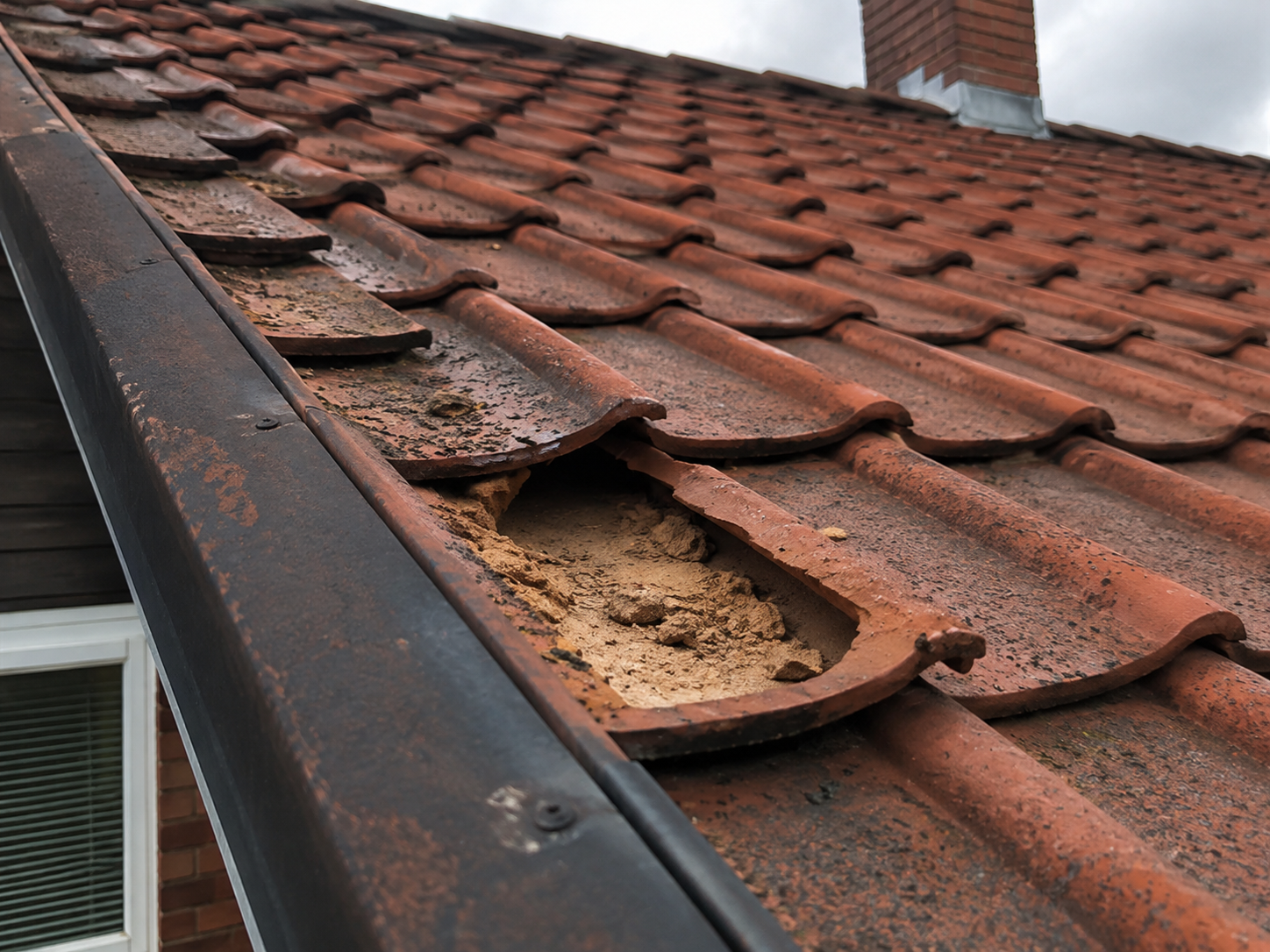
Likely cause: Wind lift or corroded nails. The felt underneath buys you days, not weeks.
Typical fix: Re-fix or replace tiles, check battens and re-secure the ridge.

Likely cause: The most common leak we attend. Failed lead or open pointing, not the chimney itself.
Typical fix: New lead flashing, re-pointing and re-sealing to abutments.
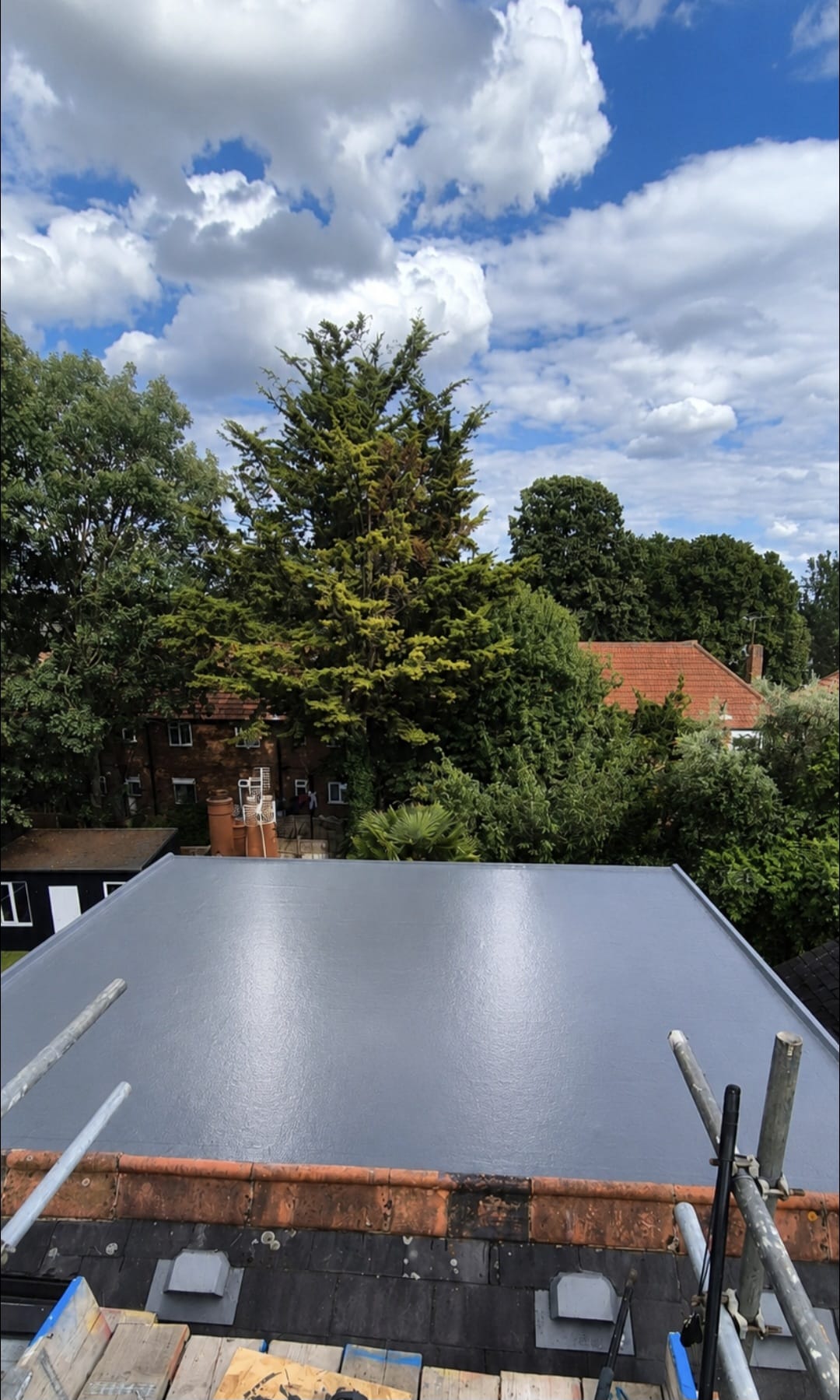
Likely cause: Felt or membrane failure, often at a joint or upstand after a cold snap.
Typical fix: Temporary patch to keep you dry, then a resurfaced deck.
Here is how emergency pricing actually works.
Attend, stop the water getting in, photograph the fault. Priced on access and how much temporary cover is needed.
Fixed price agreed before work starts, tiles, lead flashing, valley or flat roof, whichever it turns out to be.
Roof height and access, whether a tower or cherry picker is needed, materials to match, and the weather window.
Nothing is carried out until you have heard the recommendation and the price.
Most UK home insurance covers sudden storm damage but not gradual wear. Insurers ask for evidence, so every emergency visit is documented as standard.
Based in Datchet, working across Berkshire and Surrey. Closer usually means sooner.
If you are reading this with a bucket on the floor: call. Describe what you can see and you will get an honest answer about how quickly it needs attention, even if that answer is that it can wait until the weekend, or that someone nearer can get to you sooner.
— Bartosz, B.M. Roofing Solutions